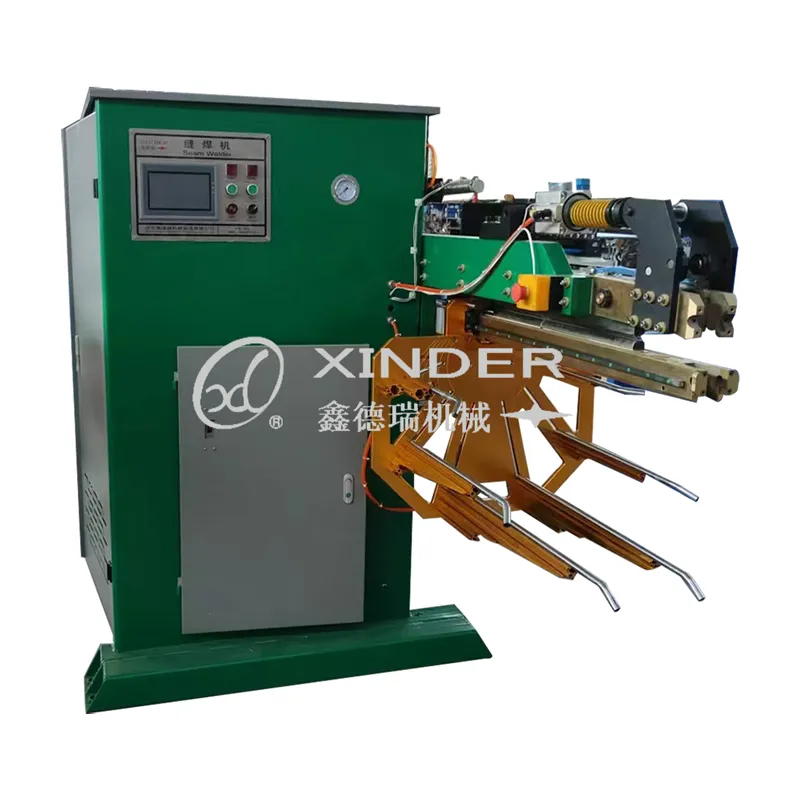
resistance spot welding machine technical performance analysis
Achieving a leak-proof seal in thin-walled metal containers requires more than just heat; it requires precise control over electrical resistance and mechanical pressure. In the production of industrial drums and chemical canisters, the integrity of the seam often determines the safety and viability of the entire product.
For manufacturers working with galvanized sheets or stainless steel, the challenge lies in maintaining weld consistency across varying diameters without damaging the protective surface layers. This is where the technical application of a resistance spot welding machine becomes critical, transitioning from a simple assembly tool to a core quality-control asset.
This analysis explores the operational mechanics, material compatibility, and selection criteria for high-efficiency welding systems used in the metal container industry.
Core Mechanics of Resistance Seam Welding
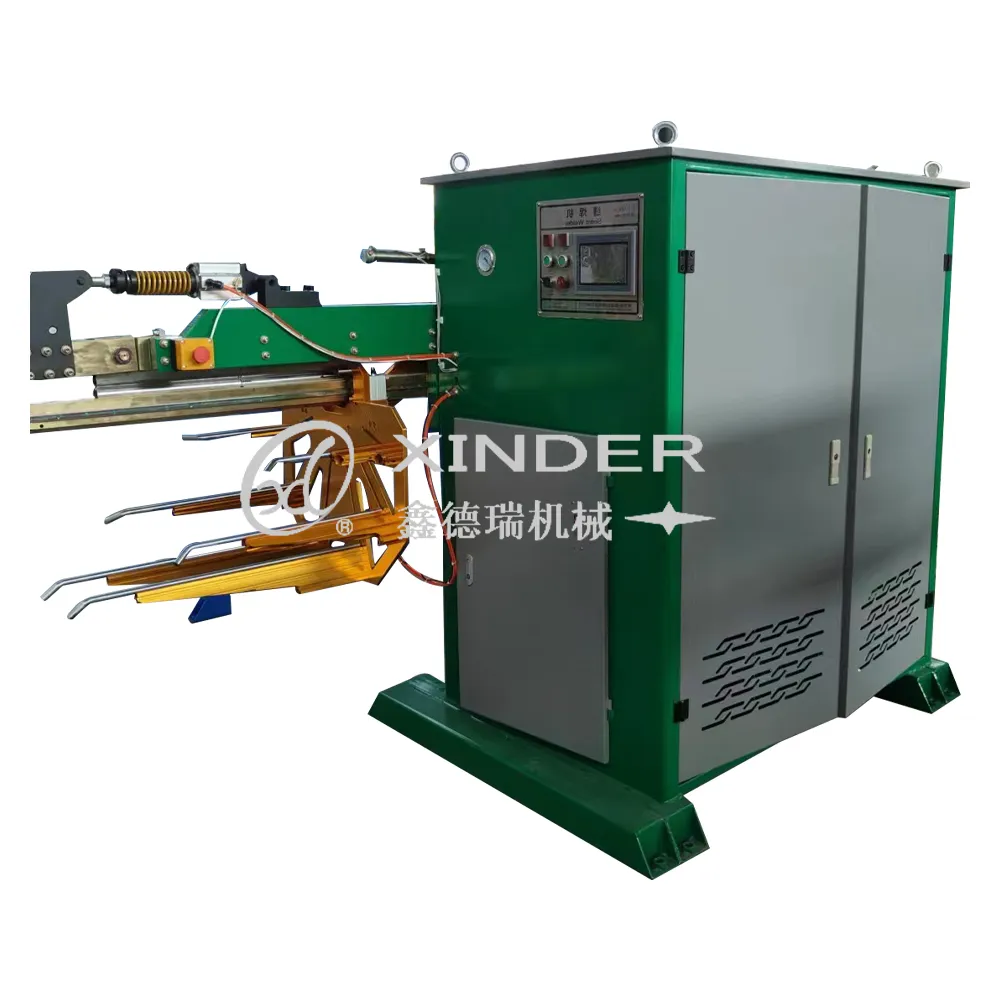
At its foundation, the process relies on the heating effect of electrical resistance. When a high current passes through the contact point of two metal sheets, the resistance at the interface converts electrical energy into thermal energy, melting the base metal to form a fusion bond.
In the context of metal container manufacturing, this is often executed as seam welding, where the electrodes move relative to the workpiece to create a continuous or intermittent line of welds, ensuring the cylinder is airtight and structurally sound.
Technical Parameters for High-Pressure Sealing
The stability of a weld is governed by a precise balance of voltage, current, and pressure. For instance, equipment operating at a rated voltage of 3-phase 380V/50HZ with an input capacity of 25KVA provides the necessary power density to penetrate materials ranging from 0.2mm to 1mm in thickness. This range is critical for producing everything from light tinplate cans to heavy-duty steel drums.
Pneumatic systems play a vital role in maintaining a consistent overlap, typically between 3-4mm, which ensures that the weld nugget is centered. A compressed air pressure of 0.5MPa is often standard to provide the clamping force required to minimize air gaps between the sheets, thereby reducing oxidation and weld splatter.
Cooling is the final critical parameter. With a recommended cold water flow rate of 20L/min, the system prevents electrode degradation and avoids overheating the workpiece, which could otherwise lead to burn-through or warping of the metal container body.
Managing Material-Specific Weld Challenges
Different metals respond uniquely to resistance welding. While carbon steel is relatively straightforward, galvanized sheets and tinplate introduce zinc or tin layers that have lower melting points and higher electrical conductivity than the base iron.
The use of copper wire as a middle electrode is a strategic technical choice to prevent the galvanized layer from contaminating or damaging the primary electrodes, ensuring long-term welding quality and reducing maintenance downtime.
Furthermore, stainless steel requires higher current densities and tighter control over the welding pulse to avoid overheating and preserving the corrosion-resistant properties of the chromium oxide layer. The ability to switch between continuous, pulse, and intermittent welding modes allows operators to adapt to these material variances.
Operational Efficiency Index
Measuring the efficiency of a welding line involves analyzing the throughput relative to the weld quality. In a typical setup, a production speed of 3-4 pieces per minute allows for a sustainable balance between high volume and the time required for precise manual feeding and positioning of the drum bodies.
The following index illustrates the relative impact of different technical factors on the overall quality of the finished metal container, based on a qualitative performance model.
Figure 2. Relative Impact of Technical Factors on Weld Integrity
Industrial Application Scenarios
The versatility of resistance welding equipment allows it to be deployed across a wide array of metal packaging sectors. For example, in the production of military-grade barrels or chemical storage drums, the priority is an absolute, high-strength seal to prevent hazardous leaks. Conversely, for gift packaging boxes or flower baskets, the focus shifts toward weld aesthetics and minimized deformation.
Beyond drums, these machines are essential for manufacturing automotive components like car mufflers and fuel tanks, as well as household appliances such as vacuum cleaner casings. The ability to customize welding diameters from 70mm up to 600mm ensures that a single equipment line can handle a diverse product portfolio.
Evolution of Automated Control Systems
Modern welding systems have transitioned from manual timers to integrated PLC (Programmable Logic Controller) systems. Utilizing brands like Delta for PLC and inverters, and Siemens for motors, allows for real-time adjustment of welding parameters. This digital precision reduces the reliance on operator experience and minimizes the scrap rate during the initial setup of a new production run.
The integration of Schneider relays and Yadeke pneumatic components further enhances the reliability of the system. By automating the timing of the weld pulse and the release of the pneumatic clamps, the equipment achieves a degree of repeatability that is impossible with purely mechanical controls.
Looking forward, the industry is moving toward "smart" welding, where sensors can detect the actual resistance of the metal sheet in real-time and adjust the current automatically to compensate for material thickness variations.
Equipment Selection Framework
Choosing the right welding equipment requires a detailed analysis of the intended end-product. A manufacturer producing small tinplate cans has vastly different requirements than one producing 200L chemical drums. The primary considerations should be the material thickness, the required seal strength, and the desired production volume.
It is also essential to evaluate the support infrastructure. A machine requiring 25KVA of power and a continuous 20L/min water supply must be integrated into a factory floor that can support these utilities without compromising other operations.
The following table provides a comparative framework for evaluating suitability based on common industrial requirements.
| Application Type | Material Thickness | Priority Factor | Recommended Mode |
|---|---|---|---|
| Chemical Drums | 0.8mm - 1.0mm | Leak-Proof Seal | Continuous Seam |
| Tinplate Cans | 0.2mm - 0.5mm | Surface Finish | Pulse Welding |
| Automotive Mufflers | 0.6mm - 1.2mm | Structural Strength | Intermittent Seam |
| Solar Water Tanks | 0.5mm - 1.0mm | Corrosion Resistance | Continuous Seam |
| Gift Packaging | 0.2mm - 0.4mm | Aesthetic Quality | Pulse Welding |
| Military Barrels | 0.8mm - 1.2mm | Extreme Durability | Continuous Seam |
Questions & Answers
Spot welding creates individual fusion points, whereas seam welding—often utilized by a resistance spot welding machine in this industry—creates a continuous or closely spaced series of spots. For containers holding liquids or gases, seam welding is essential because it provides a leak-proof barrier, whereas standard spot welding would leave gaps between the joints.
The zinc coating on galvanized steel has a lower melting point than the steel itself, which can lead to "zinc boil" or electrode contamination. To counter this, specialized equipment uses copper wire middle electrodes to shield the main electrodes from the zinc layer, ensuring the electrical arc remains stable and the weld nugget forms correctly without surface pitting.
Burn-through typically indicates excessive heat input. You should first try reducing the welding current or shortening the pulse duration. Additionally, check the pneumatic pressure; if the clamping force is too low, the electrical resistance increases at the surface, causing localized overheating. Increasing the pressure can help distribute the heat more evenly.
Yes, provided the machine supports customized welding diameters and lengths. Most industrial systems allow for adjustment of the welding diameter (e.g., 70-600mm) and length. For highly irregular shapes, a specialized design based on customer drawings is usually required to ensure the electrodes maintain the correct perpendicular angle to the workpiece.
Maintenance depends on the material being welded. Galvanized and stainless steels wear down electrodes faster than plain carbon steel. Daily inspection for electrode deformation and weekly dressing (cleaning the tip) are recommended. Using a cooling system with a flow rate of 20L/min significantly extends the life of these components by preventing thermal fatigue.
For industrial production, the answer is yes. PLC systems eliminate human error in timing and current application, which is critical for maintaining E-E-A-T standards in product safety. It allows for rapid switching between different product specifications (e.g., moving from a 10L paint bucket to a 50L chemical drum) by simply selecting a saved program profile.
Final Thoughts
The transition toward high-precision, automated resistance welding is no longer optional for manufacturers aiming for global market competitiveness. By balancing electrical capacity, pneumatic pressure, and advanced PLC control, companies can produce metal containers that meet the strictest safety and durability standards.
Ultimately, the success of a production line depends on matching the equipment's technical capabilities—such as material thickness range and cooling efficiency—to the specific demands of the end application, ensuring a seamless blend of productivity and quality.