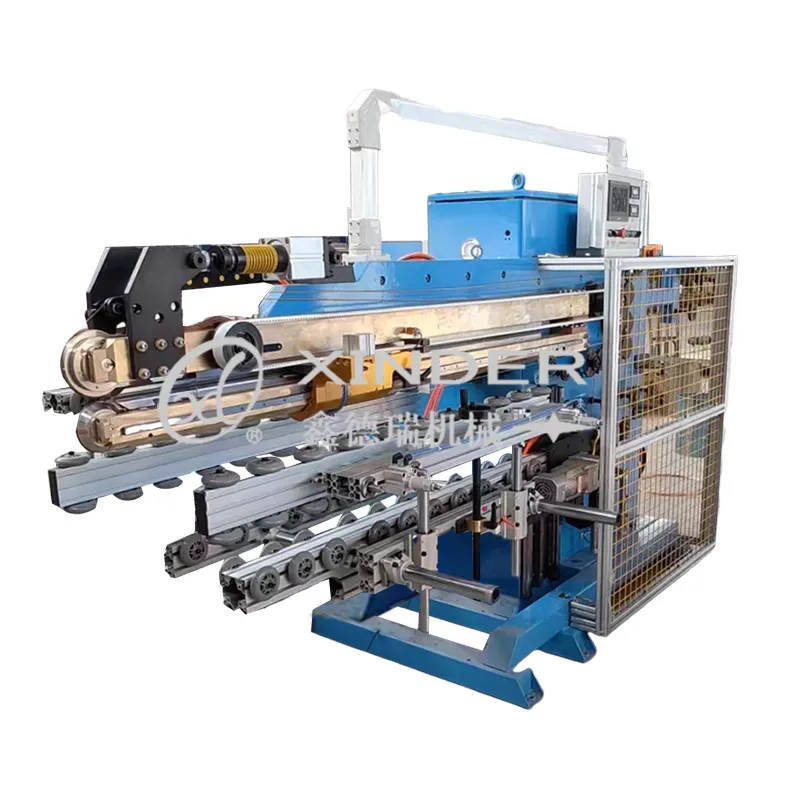
Seam Welding Machine Technical Foundation and Performance Analysis
Achieving a leak-proof seal in thin-walled metal containers requires more than just heat; it requires precise control over the overlap and electrical current. For manufacturers of chemical barrels, paint cans, and industrial canisters, the integrity of the side seam is the single most critical point of failure in the entire production cycle.
The shift toward higher production speeds and stricter environmental regulations for hazardous material storage has placed immense pressure on welding quality. Traditional welding methods often struggle with the galvanized layers of modern sheets, leading to porosity or inconsistent weld depth, which ultimately compromises the structural safety of the container.
To address these challenges, the industry has turned toward specialized seam welding machine technology. By optimizing the electrode interface and automating the control cycle, manufacturers can now ensure uniform, dense welds across various materials, from tinplate to stainless steel.
Technical Foundation of Seam Welding
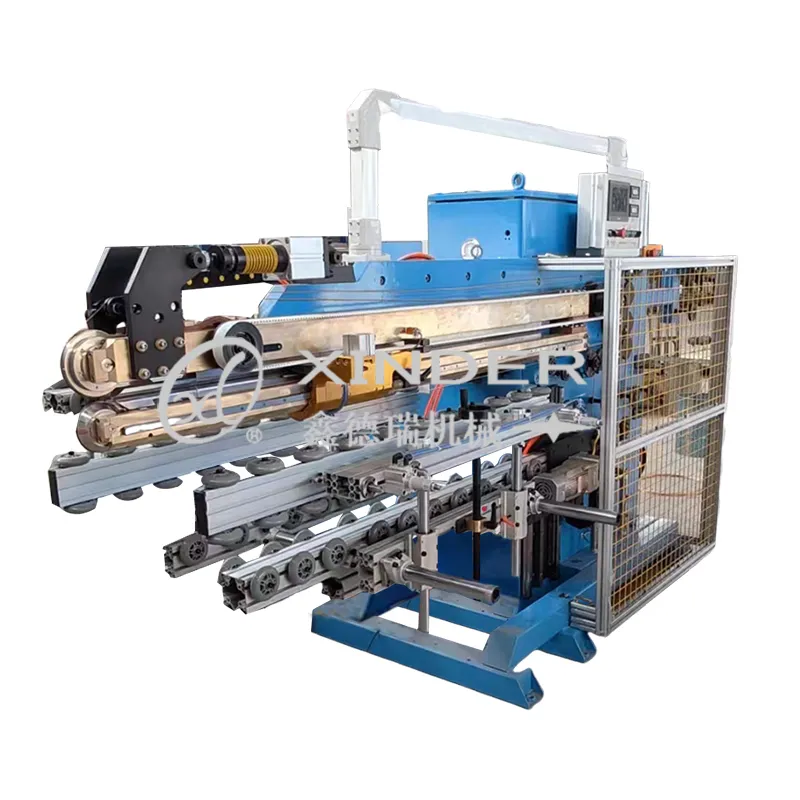
At its core, seam welding is a specialized form of resistance welding where the weld is created by a series of overlapping spots, forming a continuous, airtight joint. Unlike standard spot welding, the process involves the rotation of the workpiece against a wheel-shaped electrode, ensuring that the heat is distributed evenly along the entire longitudinal axis of the metal sheet.
This method is essential for creating two-piece metal cans and barrels. The technical goal is to achieve "dense and uniform" welds. If the current is too low, the weld lacks penetration; if too high, the thin-walled material may burn through. The balance is achieved through a synergy of pressure, current timing, and rotation speed.
Key Components for Weld Stability
The reliability of a seam welding system depends heavily on the quality of its control electronics and pneumatic actuators. To maintain a consistent arc and pressure, the integration of high-performance PLCs, such as those from Delta, allows for precise timing of the weld pulses. This is critical when switching between continuous, pulse, and intermittent welding modes, as each requires a different thermal profile to avoid warping the metal.
Power delivery is managed through industrial-grade inverters and motors—often utilizing Siemens or Taiwan Yongkun components—to ensure that the rotation of the barrel remains constant. Any fluctuation in speed during the welding process would result in "stuttering" in the seam, creating micro-gaps that lead to leaks during pressure tests.
Furthermore, the pneumatic system, utilizing components like Yadeke, ensures that the clamping force is applied uniformly. Without stable pneumatic pressure, the electrode may not maintain the required contact with the galvanized sheet, causing erratic resistance and unstable weld nuggets.
Material Compatibility and Electrode Design
One of the primary obstacles in welding galvanized steel or tinplate is the zinc coating. Zinc has a lower melting point than the base iron, which can lead to electrode contamination and "spitting" during the weld process. This contamination increases electrical resistance and degrades weld quality over time.
The use of copper wire as the middle electrode is a critical design choice to prevent electrode damage caused by the galvanized layer, ensuring that the current flow remains stable and the weld quality remains high regardless of the coating thickness.
Beyond galvanized sheets, professional-grade equipment must handle stainless steel and base iron cold plates. Because stainless steel has lower thermal conductivity and higher electrical resistance than carbon steel, the machine must be capable of adjusting the pulse duration and current intensity to prevent overheating and oxidation of the joint.
Operational Efficiency Analysis
Efficiency in a production line is measured not just by the speed of the weld, but by the reduction in scrap rates. By implementing automated control systems, manufacturers can reduce the need for manual adjustments. The ability to perform continuous seam welding allows for a seamless transition from raw sheet to finished cylinder, significantly reducing the cycle time per unit.
When evaluating the performance of a seam welding machine, the relationship between weld density and production speed is the primary trade-off. Higher speeds are possible when the PLC can maintain a precise pulse frequency, ensuring that the overlap of weld nuggets remains consistent.
Figure 2. Relative Performance Index by Welding Mode
Application Scenarios in Container Manufacturing
The versatility of seam welding is evident in the diversity of the products it creates. In the chemical and paint industry, the demand for 10L to 200L barrels requires a weld that can withstand internal pressure and corrosive agents. Similarly, the production of military-grade barrels demands a level of structural firmness that only high-frequency seam welding can provide.
Beyond barrels, this technology is applied to complex thin-walled components such as vacuum cleaner casings, fire extinguisher boxes, and car mufflers. For these irregular shapes, the machine's ability to handle various workpieces—including round, square, and irregular barrels—makes it a cornerstone of the metal packaging industry.
Evolution Toward Fully Automatic Systems
The transition from semi-automatic to fully automatic seam welding represents a shift toward "one-stop" production lines. Modern systems now integrate the rolling, welding, and cutting processes into a single synchronized workflow. This integration minimizes the handling of workpieces, which reduces the risk of surface scratches and deformation.
Customization has also become a key trend. Rather than relying on off-the-shelf machines, manufacturers are increasingly requesting targeted designs based on specific drawings or samples. This allows for the optimization of the welding head and roller diameter to match the exact gauge of the metal being used.
Looking ahead, the integration of smarter sensors will allow machines to detect weld defects in real-time, automatically adjusting the current to compensate for material inconsistencies. This move toward "intelligent welding" will further reduce waste and increase the safety of high-risk containers.
Selection Framework for Industrial Welders
Choosing the right equipment requires a careful analysis of the material type and the intended use of the final product. A manufacturer producing decorative flower baskets has different requirements—primarily aesthetic seam quality—than one producing solar water tanks, where leak-proof integrity under thermal expansion is paramount.
Key evaluation factors include the brand of the control system (PLC), the durability of the pneumatic components, and the flexibility of the welding modes. A machine that only offers continuous welding may be insufficient for very thin sheets where pulse welding is required to prevent burnout.
Ultimately, the investment should be balanced between the initial cost and the long-term maintenance requirements. High-quality components from brands like Schneider and Delta reduce downtime, which often offsets a higher initial purchase price through increased operational uptime.
| Evaluation Factor | Low-Gauge Material | Heavy-Duty Barrels | Specialty Alloys |
|---|---|---|---|
| Welding Mode | Pulse/Intermittent | Continuous | High-Frequency Pulse |
| Current Control | High Precision | High Amperage | Variable Frequency |
| Electrode Requirement | Copper Wire (Protective) | Heavy Duty Alloy | Tungsten/Specialized |
| Critical Priority | Heat Dissipation | Penetration Depth | Oxidation Control |
| Typical Product | Gift Boxes / Cans | Chemical / Oil Barrels | Solar Tanks / Mufflers |
| Automation Level | Fully Automatic | Production Line | Customized/Targeted |
Questions & Answers
While spot welding creates isolated points of fusion, seam welding uses a rotating electrode to create a continuous, overlapping series of welds. This results in a leak-proof, airtight joint that is essential for containers holding liquids or gases, whereas spot welding is typically used for structural assembly where sealing is not required.
In the production of galvanized or tinplate containers, the zinc coating can adhere to and damage traditional electrodes. Using copper wire as the middle electrode prevents the galvanized layer from causing excessive wear and contamination, which maintains a consistent electrical connection and ensures a uniform weld quality over long production runs.
These machines are engineered for thin-walled metal sheets, including galvanized steel, tinplate, stainless steel, and base iron cold plates. They are particularly effective for materials used in the metal packaging industry, such as those found in paint barrels, chemical canisters, and automotive exhaust components.
Yes, professional-grade equipment is often designed to handle various shapes. By adjusting the clamping mechanism and the rotation speed, these machines can accommodate round, square, and even irregular-shaped containers. Some manufacturers provide targeted specialized designs based on customer drawings to optimize this flexibility.
The PLC (such as Delta) and inverters manage the timing and consistency of the electrical current. High-quality components prevent voltage drops and timing errors, which are the primary causes of weld porosity or "burn-through." Using reputable brands ensures that the machine can maintain the same weld specifications from the first unit to the ten-thousandth.
Continuous welding provides the highest speed and is ideal for thicker sheets. Pulse welding, however, delivers heat in bursts, which allows the material to cool slightly between nuggets. This is critical for very thin-walled containers to prevent the metal from warping or melting through, providing a more controlled thermal profile.
Final Thoughts
The transition toward fully automatic, high-precision seam welding is no longer an option but a necessity for metal container manufacturers aiming for global quality standards. By focusing on the synergy between electrode design, material compatibility, and automated control systems, companies can significantly reduce failure rates and increase production throughput.
Whether producing industrial chemical barrels or precision automotive components, the ability to achieve a dense, uniform weld is the ultimate indicator of manufacturing quality. Investing in equipment that prioritizes stability and customization ensures that the final product is not only cost-effective but inherently safe.