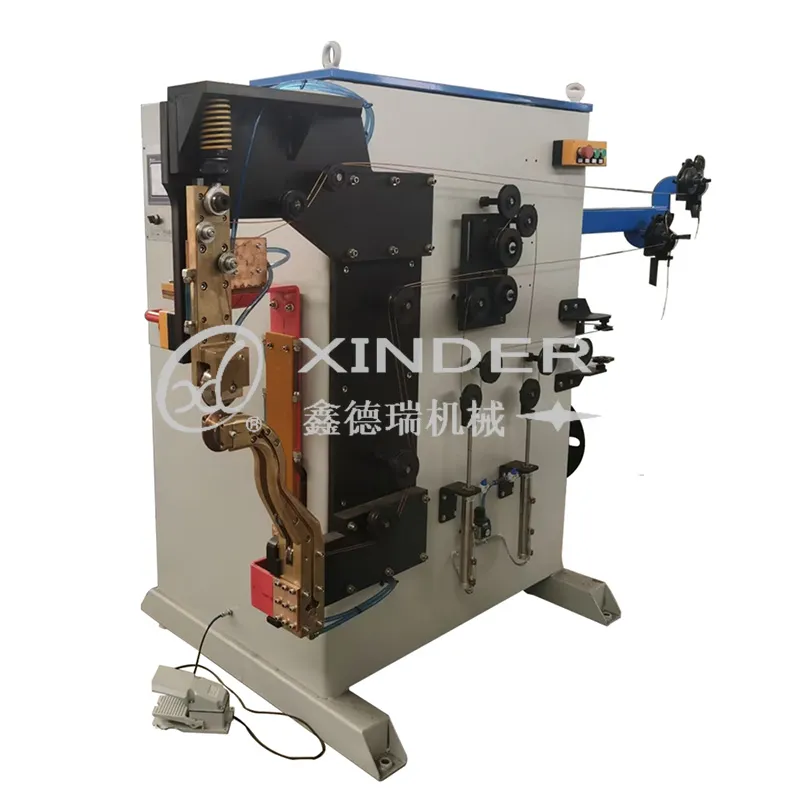
portable laser welding machine Technical Performance Analysis
Precision in metal fabrication is often dictated by the flexibility of the welding tool. In complex assemblies, traditional stationary welding systems frequently fail to accommodate irregular geometries or oversized workpieces, leading to inefficient maneuvering and suboptimal joint integrity.
The shift toward handheld technology has introduced a critical evolution in how manufacturers handle seam welding and jointing. By decoupling the power source from a fixed gantry, operators can achieve high-density, uniform welds on complex curvatures and varying material thicknesses with significantly reduced setup times.
Integrating a portable laser welding machine into a production line allows for a hybrid approach, combining the speed of automated systems with the surgical precision of manual guidance for specialized finishing and repair work.
The Transition to Handheld Laser Systems
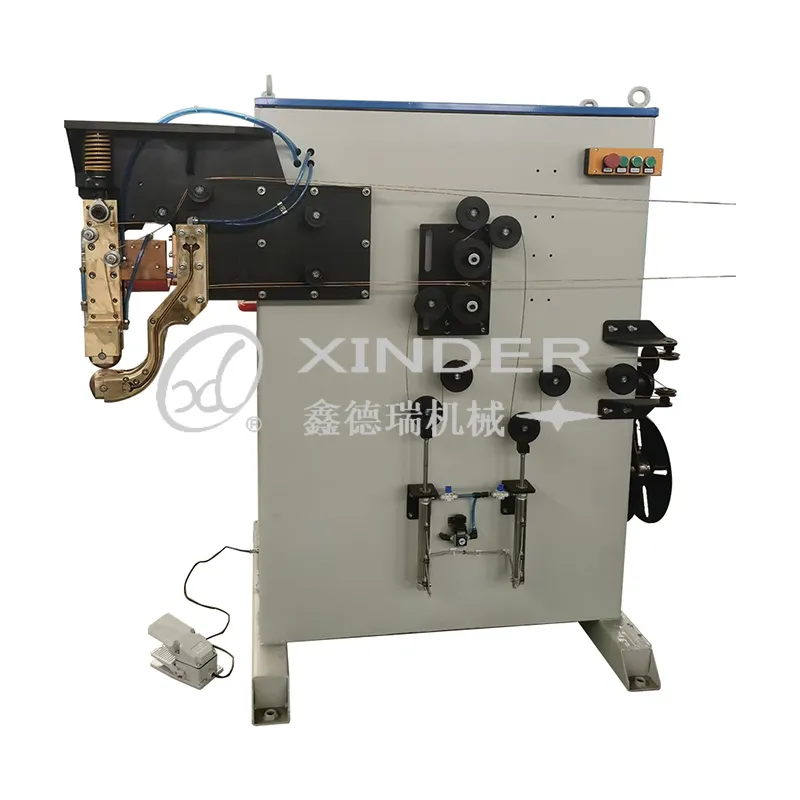
Historically, high-energy beam welding was confined to massive, enclosed cells due to safety and the rigidity of the optical path. The emergence of fiber-coupled delivery systems has changed this, allowing the high-power laser to be transported via flexible cables to a handheld gun.
This shift addresses a critical pain point in the metal container industry: the need to weld irregular shapes, such as the seams of customized chemical barrels or the bends of ship piping, where moving the workpiece into a fixed machine is either physically impossible or economically unviable.
Technical Mechanics of Portable Beam Delivery
The core of a portable laser welding machine is the fiber laser source, which generates a high-intensity beam that is transmitted through a silica fiber. This beam is then focused by a specialized lens in the handheld head to a microscopic spot, creating an intense heat zone that melts the metal instantly.
Unlike traditional TIG or MIG welding, the laser process produces a much narrower heat-affected zone (HAZ). This is particularly vital when working with thin-walled stainless steel or galvanized sheets, as it prevents warping and preserves the structural integrity of the base metal.
Control systems, often utilizing PLC frameworks like Delta or Siemens, manage the power output and pulse frequency. This ensures that the weld is not only aesthetically clean but also dense and uniform, providing the reliable sealing required for industrial fuel tanks and pressure-sensitive containers.
Material Compatibility and Joint Integrity
Achieving a hermetic seal on diverse substrates requires a deep understanding of thermal conductivity. Materials such as cold-rolled sheets and galvanized steel react differently to high-energy beams, necessitating precise adjustments in travel speed and focal length.
The efficacy of a portable laser system is measured by its ability to maintain a consistent weld bead across varying gap widths and material compositions, ensuring leak-proof performance in high-stress environments.
In specialized applications, such as those handled by Hebei Xindrui Machinery, the challenge often lies in welding galvanized layers. The use of high-precision beam delivery prevents the zinc layer from contaminating the weld pool, which is a common failure point in resistance welding of plated materials.
Relative Performance Analysis
When comparing handheld laser systems to traditional arc welding, the most striking difference is the efficiency of the energy transfer. Laser welding minimizes the input of waste heat, which drastically reduces the need for post-weld grinding and straightening.
To visualize the impact, we can analyze several key performance indicators. These indices represent relative values based on typical industrial throughput, where a higher value indicates a more favorable outcome for the manufacturer.
Figure 2. Laser Welding vs Traditional Methods Performance Index
Strategic Application Scenarios
In a typical industrial setting, such as the production of ship bending pipes or automotive exhaust systems, the ability to perform "on-site" welding is invaluable. Instead of transporting a 2-meter pipe to a fixed welding station, the operator brings the portable laser welding machine to the workpiece, reducing logistics time and the risk of material damage.
This flexibility is especially critical for the fabrication of irregular barrels—ranging from 10L to 200L. Whether welding the handle of a metal bucket or the seam of a chemical drum, the portable system adapts to the curve of the metal, ensuring a firm, leak-proof seal that is essential for hazardous material containment.
Future Trajectory of Metal Joining
The industry is moving toward "intelligent welding," where portable laser heads are integrated with sensors that automatically adjust power based on the material's reflective properties. This would virtually eliminate operator error and ensure 100% consistency regardless of the technician's skill level.
Furthermore, we are seeing a convergence of laser technology with robotic cobots. A portable laser head can be quickly swapped from a human operator to a robotic arm, allowing a factory to switch between mass production and custom, low-volume batches without investing in two separate machine lines.
As the demand for lighter, stronger metal containers grows in the aerospace and EV sectors, the ability to weld dissimilar metals—such as aluminum to stainless steel—using modulated laser pulses will become the next major technical frontier.
Selection Framework for Industrial Buyers
Selecting the right welding equipment requires a trade-off analysis between automation and flexibility. While a fully automatic seam welding machine is superior for 10,000 identical units, the portable laser system is the optimal choice for workshops dealing with varied specifications and custom orders.
Buyers must evaluate the total cost of ownership, including the cost of protective eyewear, gas consumption for shielding, and the training required for operators. A system that offers a high degree of modularity can be scaled as the business grows.
The following table provides a conceptual framework for comparing portable laser systems against traditional resistance and arc welding based on common industrial requirements.
| Evaluation Factor | Portable Laser | Resistance Welding | TIG/MIG Welding |
|---|---|---|---|
| Setup Flexibility | Extreme | Low (Fixed Jig) | Moderate |
| Heat-Affected Zone | Minimal | Concentrated | Broad |
| Welding Speed | Very High | Instantaneous | Moderate |
| Skill Requirement | Low to Moderate | Low (Automated) | High |
| Material Range | Wide (SS, Galv) | Limited (Sheets) | Very Wide |
| Joint Aesthetics | Clean/Uniform | Spot-based | Requires Cleaning |
Questions & Answers
In terms of raw beam quality, they are identical as they often share the same fiber laser source. However, stationary systems offer higher repeatability through robotic precision. Portable systems rely on operator skill but provide the unique ability to weld complex angles and large-scale components that cannot fit into a stationary cell, maintaining high joint density through a focused beam.
Handheld laser welding is exceptionally effective for stainless steel, carbon steel, galvanized sheets, and aluminum. It is particularly praised for its performance on thin-walled containers and piping where minimizing heat distortion is critical. For plated materials, the precise beam control prevents the burning of the protective coating, ensuring a clean, industrial-grade finish.
Laser safety is paramount. Operators must wear certified laser-safe goggles specifically rated for the wavelength of the fiber laser. Furthermore, the work area should be shielded to prevent reflections from harming bystanders. Modern portable heads often include safety sensors that disable the beam if the nozzle loses contact with the metal surface.
It can replace resistance welding in scenarios requiring continuous seams rather than spot welds. While resistance welding is faster for simple jointing, laser welding provides a hermetic, continuous seal. For high-pressure chemical barrels or fuel tanks, the continuous seam of a laser system is significantly more reliable and aesthetically superior.
While the initial investment for a laser system is higher than a TIG welder, the operational costs are often lower over time. This is due to the massive increase in welding speed, reduced need for expensive skilled labor, and the near-elimination of post-weld finishing and grinding processes.
Fiber laser sources are known for their longevity, often lasting over 100,000 hours of operation if maintained correctly. The primary wear-and-tear components are the protective lenses in the handheld head and the fiber cable itself. Regular cleaning of the optics and careful cable management are the keys to maximizing the system's lifespan.
Final Thoughts
The adoption of portable laser technology represents a strategic move away from the constraints of fixed-position manufacturing. By prioritizing flexibility and thermal precision, fabricators can reduce lead times and improve the structural reliability of metal containers and piping systems.
Ultimately, the value of a portable laser welding machine lies in its ability to bridge the gap between the speed of automation and the adaptability of manual craft, providing a scalable solution for the modern metalworking industry.